Sunday, 9 July 2006

Stressjukdomar. Aleksander Perski uttalar en rad osanningar i sitt inlägg i DN 4/7 2006

SOMMAR 2OO6

Läs här Kejsarens utbranda kläder, publicerat i Sociologisk Forskning


Hanne Kjöller har skrivit en förträfflig analys om rehabiliteringsgeschäft i en artikelserie i Dagens Nyheters ledarsida. Hanne Kjöllers slutkläm:

"Klart är i alla fall att Perski gjort sig en karriär på att för dyra pengar lära människor att välja den längsta kön på Konsum".

Jag återger här publicerade texter (skannade) med synpunkter jag uttalade i intervjun i hennes artikel i DN den 21/6, Aleksander Perki s inlägg den 4/7 med Hanne Kjöllers svar, och mitt inlägg i DN:s ledarsida den 7/7 2006.

Aleksander Perski antyder i stressmottagningens hemsida att jag skulle ha "inspirerat" DN:s artikelserie ovan: <<. . . en ung journalist på Aftonbladet skrev faktiskt en artikel förra året, med löpsedelsrubriken ”Utbrändhet är en bluff” och även denna artikel var inspirerad av ”stressexperten” Marcello Ferrada Nolli>> påstår Perski. Vilket är inte bara kränkande mot dessa journalister utan rent absurt. Istället är det de katastrofala konsekvenserna i samhället av dessa pseudohälsofenomen som inspirerar - och skall fortsätta att inspirera - seriös svensk journalistik.

Det är flera påståenden i Alexander Perskis inlägg som är osanningsenliga,
både avseende saken i fråga och om mig. (se mitt svar längst ner). Att jag - enligt Perski - "aldrig publicerat något vetenskapligt arbete kring stressjukdomar" är rent förtal och återigen ett absurt och märkligt offentligt påstående från samma stressmottagningsansvarige som har kategoriserat posttraumatiskt stress syndrom (PTSD) som en stressjukdom på stressmottagningens hemsida. Faktum är att jag disputerade på Karolinska Institutet med - mig veterligen - den i Sverige första medicinedoktorsavhandlingen med temat posttraumatiskt stress syndrom.


Alexander Perski uttalade i P1 för ett par dagar sedan att stressmottagningen är "en av de bäst fungerande klinikerna på Karolinska Institutet" (Studio Ett. Utbrändhet P1 6/7 2006 ). Med facit av det som avslöjades vid DN:s granskning över rehabiliteringsbranschen, i synnerhet stressmottagningen - "en helprivat rörelse med vinstintresse" med tvivelaktig rehabiliteringsframgång samt utvärdering (se nedanför) - borde KI:s ledning agera nu!

En utförligare kommentar kommer senare, när och om jag hittar tid efter min seglingsemester. Och, som har till mig redan föreslagits, kanske även något rättsligt.

Hanne Kjöllers artikel den 21/6 2006

Klicka på DN klippet för att se hela artikeln

Perkis inlägg samt Hanne Kjöllers replik den 4/7 2006:

Alexander Perski : "Jag vill ifrågasätta Hanne Kjöllers tre påståenden om rehabilitering. 1. Stressjukdomar finns inte. Bevis: HK tycker det, en doktor, som har hjärtat åt vänster (?) tycker det, en psykiater som aldrig publicerat någon vetenskap i ämnet tycker det".
Klicka på DN klippet för läsbar text


Hanne Kjöller:
"SVAR: 1. Jag har aldrig påstått att stresssjukdomar inte existerar. Jag har ifrågasatt omfattningen, att så många blev sjuka samtidigt, att fenomenet i stort sett bara existerar i en handfull länder med generösa ersättningssystem, samt att de mätbara stressrelaterade sjukdomarna sjunker under samma tid som de mer diffusa stresssjukdomarna mångdubblats i Sverige". Klicka på DN klippet för läsbar text


Och mitt inlägg i DN den 7 juli 2006


Ferrada-Noli:

Chefen för den privata stressmottagningen vid Karolinska
Institutet, KI, Aleksander Perski, uttalar en rad osanningar
i sitt inlägg i DN 4/7 samt på stressmottagningens hemsida.
Det faktum att hjärtsjukdomar har minskat samtidigt som

stressens sägs öka, avfärdar Perski att numera ”går det inte
att se vilket bidrag stress har för uppkomsten av dessa
sjukdomar”. Perski hävdar att stressjukdomar ”syns tydligt”
i bland annat ökning av självmordsförsök. Socialstyrelsens
data (Folkhälsa – lägesrapport 2005) visar att

självmordförsök i Sverige försätter att minska för alla, med
undantag
av en ”viss ökning” bland unga kvinnor i åldern
15-24 år. Här
inkluderas skärningar.

Aleksander Perski påstår att jag "aldrig publicerat något vetenskapligt
arbete kring stressjukdomar". Jag disputerade vid KI i ämnet

posttraumatiskt stressyndrom och suicidalitet - handledare var
professor emeritus Marie Åsberg - och har flera vetenskapliga
artiklar publicerade i ämnet. Posttraumatiskt stressyndrom
placeras tydligt i KI:s stressmottagnings egen lista över
stressjukdomar.

Marcello Ferrada-Noli
Medicine doktor i ämnesområdet psykiatri,
professor i folkhälsovetenskap inriktning epidemiologi


För en mer utförlig presentation av mina teser om ämnet, läs min artikel publicerade i Dagens Medicin Utmattningssyndrom är en kulturellt betingad diagnos unik för Sverige, Kejsarens utbrända kläder i Sociologisk Forskning (länk) och mitt inlägg i Professors blogg om "Freud, utbrändhet och utmattningsdepression" (länk). Läs även mina artiklar i Läkartidningen om diagnosen utbrändhet/utmattningsdepression, och mina debattartiklar om ämnet i http://ferradanoli.wordpress.com/burnout . Mina vetenskapliga artiklar om posttraumatiskt stressyndrom i
http://ferradanoli.wordpress.com/articles


Till sist önskar jag er en trevlig sommar

Saturday, 8 July 2006

Här finns nu min hemsida (med artikeln Kejsarens utbrända kläder)

Uppdatering!

Kjesarens utbrända kläder fins här


andra artiklar om ämnet finns nu här:


http://mfnoli.wordpress.com/burnout/


Mina artiklar om posttraumatiskt stressyndrom, debattartiklar och övriga vetenskapliga arbeten finns nu här:

http://ferradanoli.wordpress.com (http://ferradanoli.wordpress.com)


Och så förstås om Freud, utbrändhet och utmattningsdepression i den här bloggen http://ferrada-noli.blogspot.com/2005/12/freud-and-swedish-burn-out-utbrndhet.html

Click picture to enlarge

Monday, 10 April 2006

More poor than stressed, and with nothing to blame apart their own individualism and political passivity.

SVT1 programme Debate contacted me for my views on the media-reports of stress and poor mental health among Swedish students, and their claims for more money from society. One of my answers was: what students do for society? "What government have the Swedish students brought down lately"? Or ever? What main law at the Swedish Parliament had passed, or being modified, or being deleted, under the pressure of a Swedish university students’ mobilization?

Photo: Student revolt Paris 1968

I am now in Sao Paulo’s huge and desolated airport, sitting among a few tired Latin passengers back from their low-paid jobs at Copenhagen and London. My connection flight to Santiago de Chile is experiencing a long delay. Well safe behind the Nr 27 gate desk, the nervous-smiling officer lady from Varig – the Brazilian carrier company - explains it was a flat tire which occasioned the now estimated four hours delay!

Hilarious as it sound, the so called developing-country people gathered around the departure’s gate did believe that explanation, and immensely. I guess it matches true stories about our own old battered developing cars with worn tires “smoother than a butt”, as Ernie put it - if I well remember it.

Come on. The delay is surely motivated in the hope of the voracious Carrier to catch more passengers in their route to Santiago de Chile. This is the continent in which buses do not stop at scheduled time-points. If they have only few passengers on board the bus driver will slow down speed to catch more passengers at the next stop. If the have more than plenty, they will not even bother to stop at all in the next one.


Well, let us use this space at the pathetic VIP lounge for some real Brazilian Nescafé instant coffee in tiny plastic artificial cups, and some blog-updating.


The Swedish TV Programme Debate (TV1, every Tuesday, sent nation-wide from Gothenburg) contacted me the 24 of March on my views regarding media information on the reported university student’s stress and burn-out, and their levels of poor mental health. The journalist of the SVT programme asked me to stand by for a possible participation in the debate panel the have planned for the Tuesday programme on March the 28th. I promised to provided my views through a blog I eventually wrote by that occasion on the 26-27 of March ( see below Is really ''stress'' what causes the main problem among Swedish students?).

The day before of the planned sending, SVT wrote to me and thanked courteously for the information I provided, but at the same time they confirmed that they have decided not to focus on the burn-out problem but they should instead debate the “economic” issues of the student’s situation. Finally, they totally deleted the announced theme on student’s poor health from the Debate programme. It was at the end never discussed in Debate, although announced in the day's programme.

I will here summarise what I told in advance SVT1 on what I was considering to say during that would-to-be Debate programme. It of course never would reach the Swedish public:

1. I would support an increase in the amount of studiemedel (the grant part of it which is provided by public means), but not motivated by the alleged "students' stress and poor health”, but simply because it is motivated in due right, common sense, and also in social-justice terms.

2. The Swedish university students do not seem to have more levels of stress than the general population of Sweden (see the blog below).

3. The general situation of the Swedish students - comparing this situation with that one of their counterparts from all over the world – is actually very good. The individual cases showed and described in the Swedish media about expensive living etc. among qualified student cases, it is not representative of the average among the Swedish students. I sustain this with help of statistics provided by the student union it self.

4. There are differences between educational programs in terms of demands and experienced stress. One illustration of higher expectations levels may be students of the law faculties.

5. The real problem is not in its origin health-related, but economic-related instead.

6. That real economic-related problem is of the kind that only can be solved by political means, exclusively.

7. The students should, instead of declaring themselves sick due to “stress”, go out and fight for their rights. This is the first health-related measure they should take for their own “health” interest.

8. One main problem to consider – together with an increasing of the amount of the so called studiemedel – is the issue of the administration and manipulation of the studiemedel funds by the Swedish authority called Studiemedelsnämnden. I comment on this separately.

Further, one main issue to discuss is this. How much would the Swedish students deserve such a raise in their study grant from the perspective of society? As students, during their study-time, what have they accomplished directly for the society in terms of social change? What are the social struggles the Swedish students are engaged in order to improve social structures beyond student’s own welfare?

For instance, what government have the Swedish students brought down lately? Or ever, for that part? What main law have been pass at the Swedish Parliament under the Swedish university students’ mobilization?

The bottom line here is that students seem just follow – either full aware, or just without thinking critically - the main stream of intellectual workers, professionals and high positioned employees of today’s Sweden.

The students have here only copy-cut, with no delay or modifications, the victim role shown by their seniors and specialists in deceiving. The students think they are now the “new” victims of a pretended stressful society that push pretended defenceless individuals against the wall of psychological despair and numbness. As if they were not part of the same society they cynically claim being alienated from. As if they were not main actors of the intellectual society behind the theoretical conceptualizations that justify a classical social paradigm:

The intellectuals that profit from the ignorance of the poor with the compliance of frightened politicians. Those expecting society to allocate more budget for their clinically unfounded sick-leaves in detriment against other priorities really needed by real unprivileged segments of society.

I repeat here once more: it is not true that it is the vast majority of working people in Sweden which complain about stress and psychological strain as the principal source of their work-related problems. It is the so called cream of the cream of educated people, mostly women, mostly in high-employees positions. Yes, believe it or not. They are mostly psychologists, social workers, teachers, and also doctors.

The more poor and uneducated the less stress they experience or report. The more educated and well paid the more stress they claim as a main job-problem.

And now they expect money in millions figures, for rehabilitation. Rehabilitation of what?

--
It seems I was right on this flight delay. During this time a growing crowd of passengers to the Santiago Varig flight has gathered at the gate. This is Latin America...

Monday, 27 March 2006

Is it really ''stress'' what causes the main problem among Swedish students?


The fact is that women and men (particularly women) with higher education and social status are significantly more prone to declare that it is stress and psychogenic reasons those behind their problem in their working places.

And the fact is that copy-cut blaming of "stress" is not new among Swedish students. Actually, comparing old reports(2000) with new ones (2006) the "problem" has notably diminished. (The photo is from Aftonbladet 26/2, 2000)

These are my theses in this presentation:
  1. It is true that sectors among the Swedish students do experience stressful situations in association with their economy, quality and expectancy of their studies and career. The situation is however not representative of Swedish students as a whole.
  2. Rather than "stress", the contributing causes for such discomfort are rooted, apart the economic factor, in concrete practical problems associated with learning, alienation of contents and goals in the Swedish higher education, and existential problems of the kind affecting the Swedish population as a whole.
  3. At the contrary of what the politically correct assumption indicates, it is highly dangerous for the students - and the society as a whole - to wrongly identify at "mental or affective levels" the source of the problems experienced. The risk in "psychologizing" a problem which is in the root political and in its solution resort of the student movement it self (even if nowadays practically none existing in Sweden), can lead to further "poor health" by simply affirming the status quo of the causes, and by not discussing upon the real issues and contribute to their solution.
  4. Instead of playing a victimized role of passive societal actors, students should go out and fight for their right - and duty - to transform the society they criticize. They would very well start by transforming the anachronistic and antidemocratic structures at their universities, and which are partly accounted for the problem they say to suffer of.
  5. Further, based in epidemiologic methodological aspects, is safe to say that the publicized figures of university students declaring to experience stress would be much lesser than the reported.
  6. Declaring the experience of stress by answering questionnaires presenting options in form of fixed statements, is not a scientific evidence of the clinical existence of a disease-related negative stress.
  7. The actual socio-economic background of the Swedish students as a whole - particularly in an international context or comparison - highly discusses the general statement of a strict correlation between poor Swedish students and stress and poor health.
  8. The number of sick-leaves (sjukskrivningar) that can be administratively shown among the students, even if increasing, is a very, very poor proof of the existence of a high level of poor health among the students. In Sweden, the majority of sick-leaves are not decided by doctors on the base of clinical symptoms, but on the base of "patients" wishes for such a sick-leave.
  9. University students do not experience significantly more stress than the general population. University students do report more levels of stress and psychological items than the general population.
  10. University students are in this regard equalized with the social group in its majority they belong, both by education level and socioeconomic status.
  11. The facts are instead - as seen in the graphic bellow - that in Sweden there is a correlation between educational level and levels of reported stress and psychological strain.
The newspaper Expressen ran recently an article referring to a supposed growing stress among Swedish university students. This stress, according the paper, would be that aggravating or detrimental, that it is actually “decimating” the students.

Much of the article refers to the Student Union own study “Stoppa pressarna”, an investigation conducted on the mental devised to characterize the health status among the Swedish students. The study have concluded that mental health problems deteriorates increasingly, being reason for a serious concern.

I have examined this study and found that in its turn it is much based in another investigation, the TRIA-Rapport, conducted by the company REWIND, under assignment of the employees and students unions HTF, SKTF and ST.

As typical in this sort of assignments, the main question in the Tria report was not to find out whether the student experiences stress or not, but “up to which level they experience stress” (“I vilken utsträckning känner du dig stressad?”).

No wonder that their results were “that stress is a very common problem among the students”, and 52% agree with the formulation (Rewind’s formulation) that to a great or very much extent they feel them selves stressed”. Also predictably, the vast majority (61 %) of the respondents were women.

Please do note in this context that the main issue in the debate in which this population study is used, is the "increasing poor health, particularly mental health, among the Swedish university students".

So, publicly manifesting the "problem" of high levels of stress is a means of implying the students' poor health. But what is not tell explicitly is what is really what we are measuring in those studies when we refer to stress, and how established and reliable the findings can be from a clinical or an epidemiological standpoint.

First, trying to identify pathological or negative stress, we have that the questions in these sort of studies (now I refer to one study SFS in its turn praise in their cited document) are such confounding and unprofessional. For instance, they embed the item "stress", together with "worries" (oro) and feelings of "sort of anxiety" (which is not the same than proper anxiety).

Meaning the one who in a given moment has felt "oro" (and who does not that naturally from time to time) is categorized as having stress. And not only "stress". The interpretation goes for it is a "negative" stress, unhealthy stress, etc. All which in its turn would explain the need for, or the current existence of, a widespread sick leaves among the students.

So, to have "the feeling", or having the "idea" of being ill due to stress, can be sufficient according the Swedish general interpretation, for granting a sick leave to the stressed students?

As a professor in public health sciences, especially Epidemiology, I have to frankly state that the results of the Tria investigation doubtfully meet the scientific standard for reliable conclusions on the main aspects investigated. Why?

Apart of the above, the main flaw being the remarkable low response rate (33%) they achieved in their investigation, all which means the investigation had a dropout of 67 per cent! In effect, they have asked 4 500 students and they got only responses from 1 303.

As it can viewed in the diagram on the box (from an article I published in the Journal of the Swedish Medical Association, Läkartidningen), the accepted dropout for such studies (to be eligible for review or publication) in scientific journals is only five per cent (see the all article here). I will develop later a comment on the Tria-rapport in reference to socio-economic indicators characterizing the university students' situation.

Even worst, was the account of the results (contained in the above investiagtion) made by the study Stoppa pressarna (SFS). Here the authors did not even bothered to mention that the dropout responses in the Tria-Rapport conducted by Rewind were as high as 67 per cent, knowing that the hidding of this methodological fact absolutely alters a true interpretation of the results. The only thing mentioned was:

”Studenters stress” som utförts av företaget Rewind, på uppdrag av det fackliga samarbetet Tria.7 Undersökningen har besvarats av 1503 studenter. Undersökningen visar att stress är ett vanligt problem bland studenter. Mer än hälften, 53 procent, instämmer i stor eller mycket stor utsträckning med att de känner sig stressade. I undersökningen har man dessutom försökt identifiera en grupp med särskilt stora, stressrelaterade problem."

The report Stoppa pressarna - 17 punkter för att minska den psykiska ohälsan bland studenter is signed by Maria Noleryd and Pär Wiktorsson.

Why is this ecuation responses-rate versus dropout-rate so determinant?

In searching for answers "about stress among university students", those who are certainly more engaged and eager to participate in such studies are those who either experience that "stress" or have been told that the problem they confront in their existence as students is "stress" and "burn-out" (utbrändhet) and not other problems. In this fashion, the results of the population study will NOT reflect - with minimal acceptable level of certainty- the situation of the Swedish university students as a whole, but of those who felt them selves "called" for participating in the study.

And this is why the scientific journal Evidence-Based Medicine (1995) has pointed out a minimum of 80 per cent responses-rate, and 80 per cent in follow-up rates in post-tests, for a study can qualify for reviewing and eventually publication in such scientific journal. (see Bowling A., Research methods in health.Philadelphia: Open University Press; 1999:163.). This is the methological principle that, to the best of my knowledge, is applied by every serious scientist (a few of them is not) at the Karolinska Institutet.

Nevertheless, talking about students' stress, one first question is to asses whether the 310 000 students organized by SFS are much different from the rest of the Swedish population, in terms of their vulnerability for “stress” and “burn-out”.

In this respect we have the fact that students, due to their both social and intellectual position, are as equipped, as any well educated people, to better understand psychological concepts such us stress and burn-out, and to express verbally accordingly those notions.

The fact is that women and men (particularly women) with higher education and social status are significantly more prone to declare that it is stress and psychogenic reasons those behing their problem in their working places.

The above is the result of an investigation we conducted at the Karolinska Institute (Ferrada-Noli, Svanström) and which has been reported in an international conference in Hongkong.

The diagrams are part of our presentation and should not be reproduced without permission. See abstract here: :(http://www.hig.se/~mnf/pages/Ferrada-Noli%20ABSTRACT%20NR%201.doc).

A second question is to clarify whether all student-branches (careers, programmes, etc) share such common situation as to refer to the Swedish university students as a whole. In this respect appears that only certain programmes, such the Law-studies programme, poses higher levels of psychological demands on the students. This is not related to the studies their selves, but to the hard requirements of highest marks in order to qualify for further positions in the juridical system of Sweden.

A third relevant question is whether this is a new situation among the students, as it is implied. Or even, as clearly manifested, if it is a situation that worsens more and more.

The problem is not new and the blaming of stress by the students started just coincidentally with the appealing to stress/utbrändhet which "stress researchers" made fashionable in näive Sweden in the begining of the 2000's. (see here my debate article in Dagens Nyheter) . In the article run by Aftonbladet 26/2 - 2000 about stress and health problems among the students it reads:

"De vanligaste psykiska besvären är stress, ångest och sömnsvårigheter. . ."

According to the Aftonbladet article six years ago, 86 per cent among the students asked by the newspaper Campus declared that their studies had a negative impact in their health.

("När universitetstidningen Campus bad studenterna berätta om sin hälsa uppgav 86 procent av de 362 som svarat att studierna påverkar dem negativt.")

Now, in 2006, the studies mentioned introductorily talks of 53 per cent of stress (Rewing study) among the students. The "stoppa pressarna" report mentions a wide range of less stress among students of different programmes. From the Humanities-faculties 8 %, from the Art programmes 39 %. Only the Law students show no change in comparison with the figures in Campus 2000.

Of course that none of the above studies emphasize that in fact it is about reports by the students of feelings of being stress, which is a totally other concept than the clinical established pathological, damaging negative stress. Not to mention the miserable figures on their responses-rate

As I concluded in a critical analysis - published in Läkartidningen - on the methodological blunders of another "utbrändhet" study authored by Arbetslivsinstitutet's Lennart Hallsten (also helping the authors of Stoppa pressarna):

"Skulle det inte vara enklare, om regeringen upplöste folket och valde ett nytt?" reflekterade Brecht.

Men det som regeringar inte fåråstadkomma kan till synes populationsstudier göra.

Genom ett stortbortfall kan befolkningens representativitet förvandlas till ett tacksamt,snävt, empiriskt urval.

Genom att omdefiniera begrepp i studiensundersökta variabler blir egenskaperna hos populationen söktaistället för undersökta – och påträffade i konsonans med studiehypotesen.

En sådan underbyggnad skulle förvandla en hypotes från illusiontill gloria, med risk att hypotesen slutligen hamnar i läget null"

To be continued

Sunday, 26 March 2006

Piel Morena. Swedish Eyes

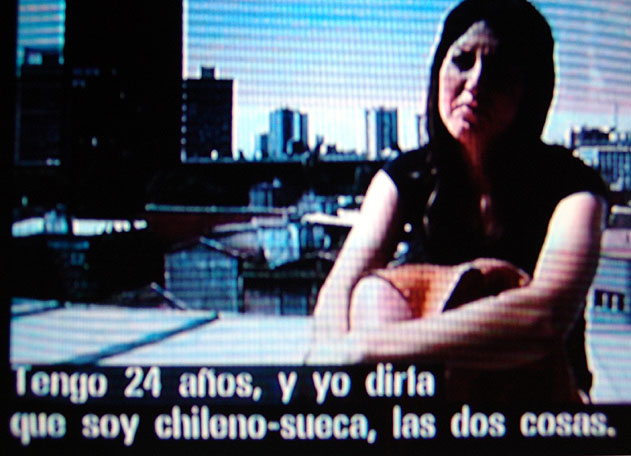
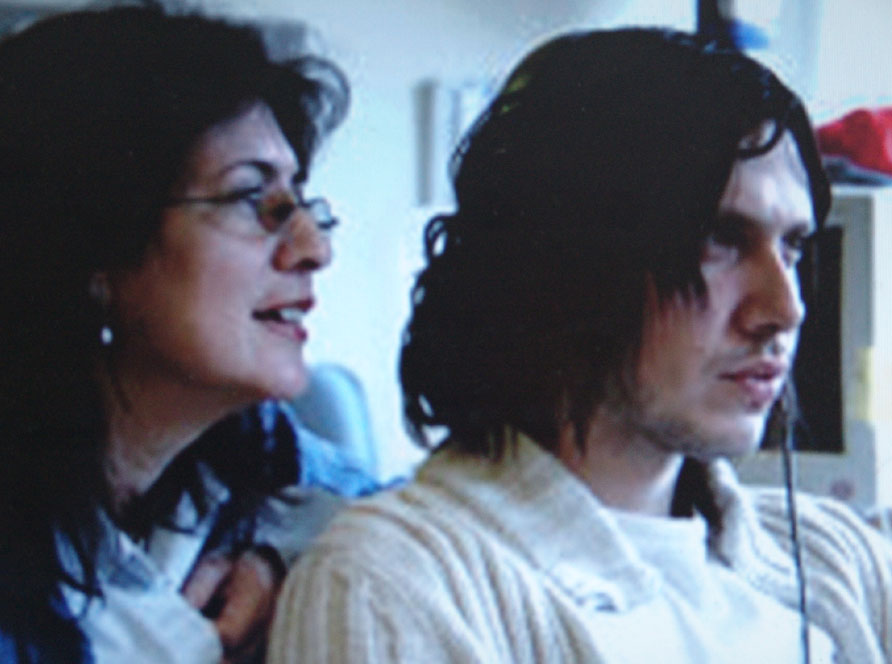
The documentary film "Piel morena Swedish eyes" directed by Rodrigo Ferrada-Noli Stoehrel (shown today anew at the Swedish Television Channel 1) it touches upon new and different perspectives on the acculturation related phenomenon of immigrant identity.

(Photos: Utbildningsradio)

Let me first declare that I have as policy not to comment publicly my sons' and daughter’s writings or cultural production published or shown in the Swedish media, however interesting they are, as I do regard them all. Rodrigo's recent documentary, nevertheless, touch upon some cross-cultural phenomena in the line of themes discussed previously here in this blog. Following, my comments on the documentary "Piel Morena - Swedish eyes" (for sending schedule of the documentary at SVT 1, here).

Three Swedish-Chilean young fellows, born in Sweden of Chilean parents - or born in Chile but grown up in Sweden since early childhood - manifest their views on prevalent cultural values and their experiences of being regarded differently, both in Sweden and in Chile. One of the main points being that they are – naturally, because so they have factually resulted by means of acculturation processes in Sweden – different to their Chilean counterparts living in Chile. The interviewed young Chileans-Swedes (or Swedes-Chileans) really impress with their psychological well being, clarity, harmony and integrity. All of them ostensibly proud of their Chilean origin or background. The director of the documentary film is himself Swedish-born and with a family background with mixed roots in Chile, Italy, Germany, and Luxemburg.

Sofia says that she thinks as a Swede, even when she is in Chile ("I have a Swedish skeleton and mind"). It became also evident in the underlying psychology disclosed by the interview, that having a Swedish analysis perspective, values, and even point of views, does not bother (perhaps a little bid the contrary) the young immigrants.

Most interesting here is that not only Swedish viewpoints are those becoming prevalent inside the piel-morena young-immigrant’s mind, but also the overall psychological “national-attitude”. For example, Sofia declares that she feels sort of guilt. This feeeling may be understood as arising even - or particularly- in front of her Chilean counterparts. Among other because, as Sofía declares, she had got so much in Sweden, such as a fantastic school, "språk", etc.

In a closer analysis,the Swedish-born Sofia may apparently feel so because this twofold reason:

a) She does not regard herself totally as a Swede, and "why would I have had so much, considering that my family is not originally from Sweden?" "Am I entitled to a full-Swede treatment"? one could read behind her lips.

The above even in spite that she describes her exile situation as result of a forced migration, and of a political kind. Being her father a former political prisoner and tortured under months during the USA supported military dictatorship in Chile.

In this regard, I believe, she has fallen victim of the hyper nationalistic trap, the old discourse that only old Swedish ancestry would qualify for such national identity-share. It is outmost dramatic to observe how a central human right (based in jus solis) is in Sweden deleted among our younger generation. For they have absolutely equal cultural rights - not only juridical - in reference to any other Swedish-born in Swedish soil.

b) She lives with the natural and honest impression on that her Swedish way of living, thinking, etc. may be better than the Chileans in Chile, or to a great extent the result of what Sweden ("so much") gives to their youth.

But, it this not a bid of European supremacist view? Of course it is not the case of blaming Sofia and the young immigrants for this stand. It is, as I postulated above, pure and crystalline acculturation. One of the essentials, one could say, for an integrated society. Nevertheless, why Swedes would feel guilt in front of "they"? Why would we understand as less desirable the growing up under Latin-American cultural parameters, even if socio-economic indicators would appear (for us in Northern Europe) as not that "developed"? What about the quality of life?

The wide-spread national conviction that that Sweden is "best" seems to get deep into the piel morena of their young immigrants and reaching their brain and hearts.


Irene. Another main point elicited in the documentary is the view of young immigrants regarding how are they characterized by the Swedish society. The interview with Irene San Martin, a Chilean immigrant girl living in Malmö is clear and breath-taking. She asks why the Swedes keep on calling her "second-generation immigrant". What their children would be called, is a general wondering arisen in the documentary. Will they be called "third generation" and then "fourth generation immigrants", and so on and so for?

Just how many years paying taxes in Sweden would be requested from the integrated immigrants of the suburbs, how much sweat and health has to be tributed from the immigrant women, how much hard-work contribution from the part of immigrant workers to the Swedish well-being and welfare would ever suffy, for their children, and the children of their children, to be regarded as SWEDES?

(In the photos, left: Laura Albanesi and Rodrigo Ferrada-Noli Stoehrel, Right; Esther Latorre)

The interviewed Rodrigo Avellán takes up yet another very interesting aspect.

He tells how his Chilean colleagues actually listen - and are ready to wide their horizon - when he comes with "Swedish solutions" for local problems the Chileans in his branch may encounter. What is the outmost interesting here is not what it is manifestly said in this regard in the documentary, but what surely it comes as immediately reflection by the viewer. Namely, that the Swedes hardly listen at the immigrants at their workshops and jobsites, even knowing that many of these have a well reputed professional background, etc. In fact, many Swedish institutions - structurally - neglect the immigrant manpower and their potential knowledge and aid.

Making us to think further

In sum, a positive, critical, and very interesting documentary, which has the main merit of invite for analysis and reflection on how Swedes and their immigrants can find yet a better path for enrichment of all cultures, here and abroad. In other words, as documentary films should be.

One more thing, viewing perspectives on the so called integration:

When acculturation ends and alienation begins?


Thursday, 16 March 2006

The contribution of ethnic discrimination to suicide.

For individuals already at risk for suicidal behaviour, discrimination added to social frustration may produce devastating effects.

I was asked today by a journalist student from Denmark for a statement concerning possible associations between discrimination and the increasing of suicidal attempts in Denmark among asylum-applicants. Quoting sources of the Danish Red Cross, he referred that such suicide attempts in Denmark "have increased from 1.8 pct in 2004 to 3.0 pct in 2005."
My painting One-way ride, 2004. Oil on canvas 70 x 80 . Click to enlarge

I have previously stated (in a SIDA conference at Stockholm University) that the hazards of negative or forced acculturation, problems in adaptation and uncertain existential conditions in the host country, and paramount, the psychiatric effects of posttraumatic statuses, make the individual vulnerable for the elicit of PTSD comorbidity (depression) or the enhancing of the eventually existing depressive states or traits.

Particularly sensitive with regard to suicidal behaviour are ideations of guilt arisen in exile (“I survived, others died”, etc) and in general the debut or worsening of the PTSD depressive symptoms or onset of depressive disorders as secondary diagnoses to PTSD.

But, what would be the contribution of ethnic discrimination to suicide?

Thinking in today's main debate article in Dagens Nyheter authored by a professor colleague (Jerzy Sarnecki), and in which I believe he had two main points:

a) He empirically confirmed that immigrants are sentenced to harder penalties than Swedes do, for the same crimes. Clearly, being this discrimination.


b) Discrimination, which leads to utanförskap, may lead through this towards criminal behaviour.

This is my reflection:

I wonder if the same dynamics may apply to suicidal behaviour. Discrimination reinforces psychological isolation, alienation, and the sense of unfulfilled life through the deprivation of social means necessary to accomplish social integration.

For individuals already at risk for suicidal behaviour, discrimination added to social frustration may produce devastating effects.
  • On the scale describing levels of acceptance of a society towards their immigrants, we use to say that at one end we find total integration, and at the other end we find total isolation. But the true is that the opposite of integration is in fact implosion.
  • Implosion, as in demolition, is the negation of integration and cohesion.
  • The ultimate probe or confirmation of a total lack of integration would be suicide.

The political question being, who is responsible for such discrimination.

The abstract of my presentation (at the Sida Conference) "Why do PTSD comorbidity and the suicidal behaviour of refugees and torture victims increase in exile? A social psychiatric hypothesis". here

Full text of my article in Läkartidningen (Journal of the Swedish Medical Association) "Traumatic stress and suicidal behaviour among refugees" (Traumatisk stress och flyktingars suicidbeteende ­ epidemiologiska fynd) here

To be continued

Wednesday, 15 March 2006

A mourning sea. Just a human tragedy. . .

What other name would you give to this painting?

Click on the picture for a larger view


I have shown this piece to the public only once, at my art exhibition organized by the Chilean Embassy in Stockholm. I have now, just a few days ago, been asked by Dr Liz Herbert McAvoy - on behalf of the organizers of an international conference to be held at the University of Wales, Swansea - for this painting's rights and with the purpose of using the painting as the pictorial motive for the poster, conference programme, etc.

Well, I would be honoured. That is one thing.

Nevertheless, reflecting on the possible risks and consequences commented in the blog next below, I wonder whether this painting may help to stress my point also there. You are welcome to read it, state your opinion (address:
marfer@ki.se) and suggest a name for the painting.